Students in Westlake and Lake Austin waterfront homes for sale are served by the highly-rated Eanes ISD. Barton Creek Elementary (K-5), Eanes Elementary (PK-5), and Bridge Point Elementary (K-5) are the elementary schools. Hill Country Middle (6-8) and West Ridge Middle (6-8) are the middle schools. Westlake High (9-12) is the only public high school in the district. Eanes ISD has been rated by Niche as the #1 school district in Texas and #2 in the United States. There are a number of private school options in the area, including Trinity Episcopal School (K-8), Fusion Academy Academy (6-12), and St. Stephen's Episcopal School (6-12). For a full list and more information on schools in the Lake Austin and Westlake areas, please consult your SR Group real estate advisor.

LiveLakeAustin.com
Local Knowledge, Global Reach.
Your Lake Austin Real Estate Experts
Loading ...
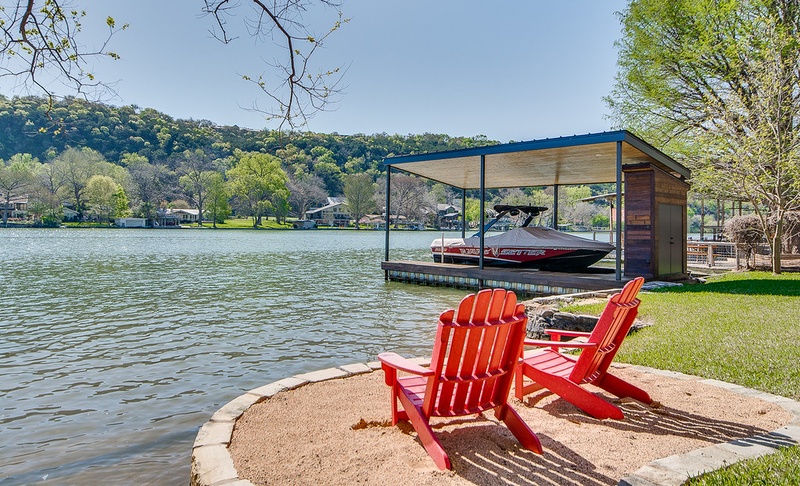
Lake Austin Real Estate, Austin, TX
Lake Austin is one of the most iconic parts of Austin and home to some of the most incredible luxury real estate in Central Texas. Situated just west of Downtown Austin, Lake Austin is 22 miles long, with a surface area of 1,599 acres, and a maximum depth of 75 feet. Lake Austin was formed in 1939 and was originally named Lake McDonald. As one of the only constant-level lakes in Texas, the lake is active nearly year round with boating, water sports, fishing, and paddle boarding. The water temperature is lower than that of Lake Travis, because the lake is principally fed from the outflow of the bottom of Lake Travis at Mansfield Dam. From the famous Pennybacker Bridge (360 Bridge) across Lake Austin to the sweeping hill country views from Mount Bonnell (the highest point in Austin), there are so many reasons to love Lake Austin. Austin Country Club, a private golf club established in 1899, is situated along the south bank of Lake Austin, just southeast of the bridge.
The amazing homes on Lake Austin are the most sought after homes for sale anywhere in Austin. From the historic and charming homes of Tarrytown on the southeast end of the lake near Central Austin to the well-established neighborhoods and homes in West Lake Hills, every waterfront property on Lake Austin is a show stopper. A few of the other popular waterfront communities on the lake are Austin Lake Estates, Green Shores, Rivercrest, Steiner Ranch, Watersedge, and Bee Cliffs. Many of the lake houses on Lake Austin for sale feature a pool, a private dock, and pristine landscaping. Most are also gated properties. Prices for these homes typically start just above $1 million on the low end and some will sell north of $10 million.
Make lake estate owners prefer discretion and choose to sell their home privately, off market. For our buyer clients, we are able to leverage our extensive network and private exclusive channels to find the right property.
Where in Austin, TX is Lake Austin?
Lake Austin is part of Texas' lower Colorado River, not to be confused with the larger Colorado River that flows through the Grand Canyon in the Southwestern United States. It is part of the Texas Highland Lakes, a chain of seven (7) lakes in Central Texas. It begins below Lake Travis at Mansfield Dam in West Austin and flows from northwest to southeast, ending at Tom Miller Dam near Downtown Austin, turning into Lady Bird Lake (Town Lake). Residents will find themselves 3-15 miles from Downtown Austin and 10-28 miles from Austin-Bergstrom International Airport.
What to do near Lake Austin?
Lake Austin Spa Resort, located at the north end of Lake Austin near the master-planned community of Steiner Ranch, has been rated by Conde Nast Traveler as the #1 Destination Spa Resort in North America and the #2 Destination Spa Resort in the World. Emma Long Metropolitan Park (City Park) and Commons Ford Ranch Metropolitan Park both sit on the shore of the lake, enjoyed by residents and visitors alike. For those fishing, Lake Austin is known for its sizable population of large-mouthed bass.
Although you can reach each of them by car, Hula Hut, Abel's on the Lake, County Line on the Lake (off Bull Creek), and local favorite, Ski Shores Cafe, can all be accessed by boat or jet ski for lunch or dinner. We also highly recommend a cruise to Mozart's Coffee Roasters to grab breakfast and your morning coffee.
Lake Austin Schools
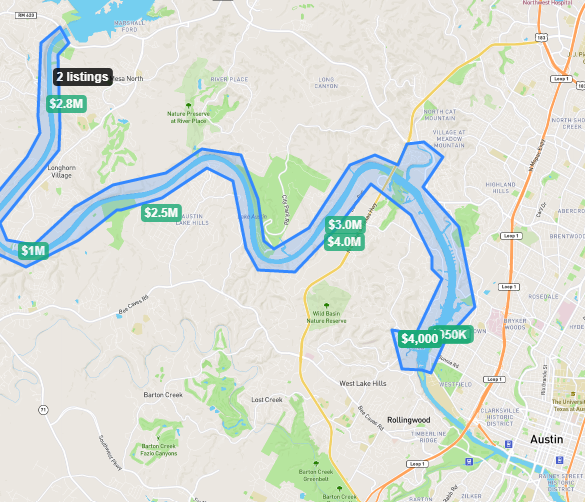
Map Search
Get to know your Lake Austin specialist

Jeffrey Grant
Principal | REALTOR®, CLHMS
Jeffrey is the co-founder and principal of the SR Group, Austin’s premier luxury, waterfront, and relocation real estate group, and the creator of DestinationATX.com and SearchLakehouses.com.
A native to Austin, Jeffrey has had the opportunity the witness the city's tremendous growth and change firsthand. Introduced to real estate at a young age by both his grandfathers, he has been involved in the local real estate market most of his life, beginning in 2007 with a custom home and pool builder where he led the construction of luxury properties in the Bee Cave and Lakeway areas..
Our Lake Austin specialist is ready to help!
To get the process started, please use the form below.